Browse Exhibits (1 total)
Afro-Diasporic Subjectivities
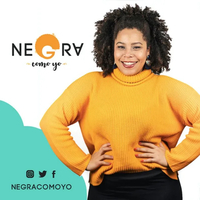
The experience of migration creates a distance from the country of origin, yet this distance is offset by the space that connection continues to occupy in one's mind. Although migration often involves the loss of identity and support networks, it also offers the possibility of discovering one's personality in the absence of familiar surroundings. The projects discussed here are united by a central theme: the affirmation of personal subjectivity. This affirmation underscores a form of political agency that gains strength through the migratory experience. The political subjectivity of these creators also takes shape through Afro-Latinidad and through the ongoing struggle to affirm ancestral ties with African peoples and with the Indigenous populations of the continent. These connections remain present and meaningful in their everyday lives.
The initiatives presented in this study offer an interpretation—and, beyond that, a form of engagement—that challenges the dominant cultural discourse in Venezuelan society. These projects convey both empirical knowledge and knowledge rooted in dialogue, especially those that center the voices of Black women and Afro-activists throughout the Americas and the Caribbean. In this context, the expansion of perspective made possible by migration becomes vital for understanding oneself as a transformative subject and for activating a meaningful relationship with the world. As a result, the literary, visual, and media works examined here communicate a political vision through their subjectivity and aesthetic choices. Through their subjective and aesthetic dimensions, these cultural productions advance a political message that seeks to inspire resilience and resistance in others (translation from original Spanish by Archivo Venezuela).
Oriana Mejías Martínez (Maracay, 1989)
Guest Curator