Browse Exhibits (2 total)
Afro-Diasporic Subjectivities
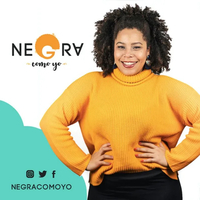
The experience of migration creates a distance from the country of origin, yet this distance is offset by the space that connection continues to occupy in one's mind. Although migration often involves the loss of identity and support networks, it also offers the possibility of discovering one's personality in the absence of familiar surroundings. The projects discussed here are united by a central theme: the affirmation of personal subjectivity. This affirmation underscores a form of political agency that gains strength through the migratory experience. The political subjectivity of these creators also takes shape through Afro-Latinidad and through the ongoing struggle to affirm ancestral ties with African peoples and with the Indigenous populations of the continent. These connections remain present and meaningful in their everyday lives.
The initiatives presented in this study offer an interpretation—and, beyond that, a form of engagement—that challenges the dominant cultural discourse in Venezuelan society. These projects convey both empirical knowledge and knowledge rooted in dialogue, especially those that center the voices of Black women and Afro-activists throughout the Americas and the Caribbean. In this context, the expansion of perspective made possible by migration becomes vital for understanding oneself as a transformative subject and for activating a meaningful relationship with the world. As a result, the literary, visual, and media works examined here communicate a political vision through their subjectivity and aesthetic choices. Through their subjective and aesthetic dimensions, these cultural productions advance a political message that seeks to inspire resilience and resistance in others (translation from original Spanish by Archivo Venezuela).
Oriana Mejías Martínez (Maracay, 1989)
Guest Curator
Cartographies of Uprooting
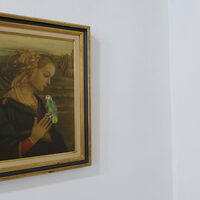
Cartographies of Uprooting
Art and Memory in the Venezuelan Diaspora
Cartographies of Uprooting is a digital exhibition that brings together 20 visual artists from diverse generations and trajectories within the Venezuelan diaspora. Through media such as painting, installation, photography, sound art, video art, and textiles, their works invite us to explore the marks left by migration, collective trauma, and processes of identity reconstruction.
Artists including Juan Diego Pérez La Cruz, Ronald Pizzoferrato, Lucía Pizzani, Juan Carlos Silva, Suwon Lee, Daphne Arthur, Muu Blanco, Andrea Dudier, Sebastián Rodríguez y Vasti, Camila Salcedo, Alejandro Rizzo, denirée isabel, Sabrina Montiel-Soto, Ana Luisa Bernárdez Notz, José García Oliva, Francisca Sosa López, Rómulo Martínez, Gustavo Zajac, Cassandra Mayela Allen, and Laura Castellano approach memory as a site of symbolic contestation. From scattered geographies, their works examine themes of loss, nostalgia, and transformation—turning uprootedness into a creative force and a tool for testimony, refuge, and resistance.
The pieces in this exhibition unfold personal and collective memories through a lens that is both critical and sensitive. Alejandro Caiazza, for instance, transforms painting into a visual chronicle of the Venezuelan exodus, integrating symbols of popular culture and scenes from everyday life, recontextualized through the experience of displacement. In a different register, Francisca Sosa López combines installation and mixed media to translate the fragility of memory into ephemeral structures that question the permanence of deterritorialized remembrance.
Sabrina Montiel-Soto’s Traces of Erosion in Koekenstad expands this dialogue through a multidisciplinary installation that interweaves found objects, collage, sculpture, artistic photography, and video performance to explore history, memory, and cultural transformation. The body also emerges as a migratory territory in several of these works—for example, in Muu Blanco’s sound performances and Andrea Dudier’s visual poetics of GIFs, where movement becomes a metaphor for geographical and emotional instability. These proposals resonate with the work of artists such as Cassandra Mayela Allen, who uses textile materials and embroidery as tools of communal archiving, weaving stories of displacement through oral and tactile memory.
The range of media employed—painting, digital art, installation, photography, sound, and textile—reveals that diaspora entails not only the displacement of bodies, but also of languages, mediums, and modes of expression. Through artistic photography, Suwon Lee captures landscapes that reflect absence, while Rómulo Martínez reimagines photographic archives as malleable material, capable of challenging temporal linearity and reconstructing history through its fragments.
Themes such as identity, memory, loss, and nostalgia find expression in visual languages that move between the documentary and the symbolic. Works like those of Gustavo Zajac, which reframe religious symbols and precious materials, open space for reflection on the sacred and the profane in transnational contexts.
By bringing these artistic practices together on a shared platform, Cartographies of Uprooting does not aim to homogenize the Venezuelan exodus, but rather to illuminate its complexity and plurality of voices. The migratory condition, marked by the constant tension between loss and reconstruction, emerges here as a source of creative energy. These works not only document collective memory, but also question it, rewrite it, and reimagine it from other perspectives. At a historical moment when global migrations are reshaping our understandings of belonging and citizenship, this exhibition invites us to consider how art can also function as testimony, refuge, and agency.
We are especially grateful to Gabriella Wright, who collaborated on the documentation of the works included in this exhibition during her research internship at the University of Cincinnati.
Patricia Valladares
University of Cincinnati
La versión en español de la exposición está disponible aquí.