Browse Exhibits (2 total)
El Callao Carnival in New York City
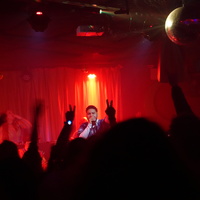
On a lively Friday night in Crown Heights, the distinctive rhythms of Calipso de El Callao resonated along Dean Street and Classon Avenue, transforming Friends and Lovers—a Brooklyn venue—into a vibrant celebration of Venezuelan heritage. This unique exhibition documents the commemoration of Venezuela’s Carnaval de El Callao, a singular event organized by MPeach (Mariana Martin Capriles) and the musical collective Tambor y Caña (also known as Tambor NYC) at Friends and Lovers on March 8, 2024. The celebration of El Callao stands as a testament to how the Venezuelan diaspora fosters community and preserves Afro-Venezuelan cultural memory through music, dance, and nightlife performance.
Founded in 2017 by Willie Quintana and Daniel Prim, Tambor y Caña has evolved into what Quintana describes as a movimiento—a cultural movement that honors Afro-Venezuelan musical traditions while fostering connections through shared spaces within New York City’s growing Venezuelan community. Their work, which includes educational initiatives such as ETAPA (Escuela de Tambor Afro-Venezolano y Percusión Afro-Latina), reflects a deep commitment to the preservation of Venezuelan heritage. MPeach and Quintana have also launched TamborEllas, an all-female ensemble dedicated to Venezuelan folk instruments.
The collection featured in this exhibition vividly conveys the sounds, sights, and communal spirit of Carnaval de El Callao as celebrated in the diaspora. From the resonant pulse of los tambores to the neon-lit ambiance where disco balls shimmer above dancing bodies, the exhibition captures the essence of the celebration. It reveals how Venezuelan migrants recreate a fleeting sense of homeland through rhythm and festivity, transforming temporary venues into spaces of belonging and collective memory.
The celebration of El Callao’s carnival traditions—rooted in both African resistance and Catholic syncretism—serves as a powerful example of how cultural practices travel, adapt, and flourish in new contexts. As one attendee aptly expressed, Esto es comunidad—“This is community.” In documenting this event, we bear witness to music’s pivotal role as a vehicle for preserving heritage, building networks, and reimagining Venezuelan identity within the broader fabric of New York’s diasporic communities. The artistic and musical performances of El Callao by MPeach, TamborEllas, Tambor NYC, and Quintana affirm the enduring power of music to connect Venezuelans with their Afro-Venezuelan roots and to sustain Afro-diasporic identity across Latinx communities.
Visit the exhibition through this link.
La versión en español de esta muestra está disponible aquí.
Cartographies of Uprooting
Cartographies of Uprooting
Art and Memory in the Venezuelan Diaspora
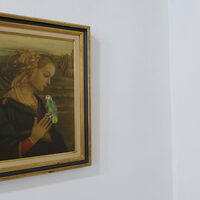
Cartographies of Uprooting is a digital exhibition that brings together 20 visual artists from diverse generations and trajectories within the Venezuelan diaspora. Through media such as painting, installation, photography, sound art, video art, and textiles, their works invite us to explore the marks left by migration, collective trauma, and processes of identity reconstruction.
Artists including Juan Diego Pérez La Cruz, Ronald Pizzoferrato, Lucía Pizzani, Juan Carlos Silva, Suwon Lee, Daphne Arthur, Muu Blanco, Andrea Dudier, Sebastián Rodríguez y Vasti, Camila Salcedo, Alejandro Rizzo, denirée isabel, Sabrina Montiel-Soto, Ana Luisa Bernárdez Notz, José García Oliva, Francisca Sosa López, Rómulo Martínez, Gustavo Zajac, Cassandra Mayela Allen, and Laura Castellano approach memory as a site of symbolic contestation. From scattered geographies, their works examine themes of loss, nostalgia, and transformation—turning uprootedness into a creative force and a tool for testimony, refuge, and resistance.
The pieces in this exhibition unfold personal and collective memories through a lens that is both critical and sensitive. Alejandro Caiazza, for instance, transforms painting into a visual chronicle of the Venezuelan exodus, integrating symbols of popular culture and scenes from everyday life, recontextualized through the experience of displacement. In a different register, Francisca Sosa López combines installation and mixed media to translate the fragility of memory into ephemeral structures that question the permanence of deterritorialized remembrance.
Sabrina Montiel-Soto’s Traces of Erosion in Koekenstad expands this dialogue through a multidisciplinary installation that interweaves found objects, collage, sculpture, artistic photography, and video performance to explore history, memory, and cultural transformation. The body also emerges as a migratory territory in several of these works—for example, in Muu Blanco’s sound performances and Andrea Dudier’s visual poetics of GIFs, where movement becomes a metaphor for geographical and emotional instability. These proposals resonate with the work of artists such as Cassandra Mayela Allen, who uses textile materials and embroidery as tools of communal archiving, weaving stories of displacement through oral and tactile memory.
The range of media employed—painting, digital art, installation, photography, sound, and textile—reveals that diaspora entails not only the displacement of bodies, but also of languages, mediums, and modes of expression. Through artistic photography, Suwon Lee captures landscapes that reflect absence, while Rómulo Martínez reimagines photographic archives as malleable material, capable of challenging temporal linearity and reconstructing history through its fragments.
Themes such as identity, memory, loss, and nostalgia find expression in visual languages that move between the documentary and the symbolic. Works like those of Gustavo Zajac, which reframe religious symbols and precious materials, open space for reflection on the sacred and the profane in transnational contexts.
By bringing these artistic practices together on a shared platform, Cartographies of Uprooting does not aim to homogenize the Venezuelan exodus, but rather to illuminate its complexity and plurality of voices. The migratory condition, marked by the constant tension between loss and reconstruction, emerges here as a source of creative energy. These works not only document collective memory, but also question it, rewrite it, and reimagine it from other perspectives. At a historical moment when global migrations are reshaping our understandings of belonging and citizenship, this exhibition invites us to consider how art can also function as testimony, refuge, and agency.
We are especially grateful to Gabriella Wright, who collaborated on the documentation of the works included in this exhibition during her research internship at the University of Cincinnati.
Patricia Valladares
University of Cincinnati
La versión en español de la exposición está disponible aquí.